

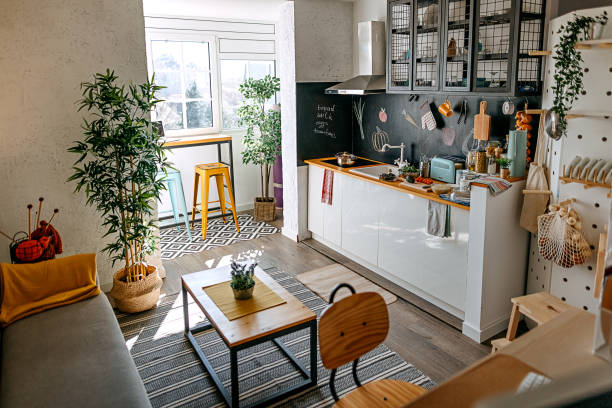
Particularly when you’re balancing everyday cooking, cleaning, and storage duties, a small kitchen can frequently feel claustrophobic and disorganized. However, a small area need not restrict your kitchen’s usefulness or your ability to be creative in the kitchen. Without the cost or trouble of a complete renovation, you can turn even the smallest kitchen into a productive, livable, and orderly workspace with a little clever planning and organization.
Knowing how you use the space is the first step in organizing a tiny kitchen. You can learn what you actually need on hand and what can be put away by keeping an eye on your culinary routine and how things go. Frequently, things that aren’t used on a regular basis are left out of the kitchen, which leads to clutter rather than a lack of room. To begin, declutter. Anything that is broken, expired, or rarely used should be removed. Think about giving away or storing a device or utensil that hasn’t been used in months. Decluttering is liberating; it makes space in the mind and body, paving the way for improved organization.
Think vertically after you have a better notion of what’s left. While counter and cabinet space are sometimes limited in small kitchens, vertical storage possibilities is rarely absent. Counters and drawers can be made available by installing magnetic strips or wall-mounted racks. In addition to saving cabinet space, hanging pots and pans on a robust rack above the stove allows you to incorporate kitchenware into the design of your kitchen. Wall-mounted magnetic knife strips reduce the risk of lost blades, save up drawer space, and keep knives within easy reach.
Another ingenious approach to optimize storage is to use the interiors of cabinet doors. Spice jars, measuring spoons, cleaning supplies, and even cutting boards can be stored on hooks, racks, or slender baskets that are attached to the doors. Small goods are kept tidy in this concealed storage without taking up too much space on your worktops.
A small kitchen would be impossible without drawer organizers. Utensils, electronics, and other items are frequently tangled in deep drawers, making it difficult to locate what you need fast. You can save time and irritation by using dividers and trays to divide objects into neat divisions. Additionally, think about allocating particular drawers to different categories, such as one for baking supplies, another for culinary utensils, and a different one for regular cutlery.
Uniform containers can be a great way to organize a pantry or cupboard. In addition to saving room, transferring grains, flours, spices, and pulses into transparent, stackable jars makes it easier to identify contents and keep an eye on supply levels. Another level of efficiency is added by labeling these containers. When everything fits together perfectly and there are no mismatched bags or boxes taking up strange shapes, you may be astonished at how much more roomy your cabinets feel.
In small kitchens, counter space is frequently the most problem. Appliances that aren’t used frequently, like toasters, mixers, and blenders, should have special storage locations separate from the main prep area to keep things tidy. Consider multipurpose furniture, such as a small kitchen cart or an island with shelves, if your kitchen does not have enough cabinet space. Appliances, bowls, and other goods can be stored in these moveable sections, which can then be moved or tucked away as needed.
When it comes to kitchen organizing, lighting is frequently disregarded. Well-positioned, bright lights may enlarge a small area and create a more inviting atmosphere. Countertop illumination from under-cabinet lighting facilitates food preparation and lessens shadows that give the impression that the kitchen is small. To let in as much natural light as possible, swap out heavy window treatments with light, breezy blinds or drapes.
Simplifying the items you keep on the counters is another method to maintain organization in your kitchen. Although a few basic accessories, like a fruit bowl or coffee machine, provide charm, try to keep countertops from becoming catch-all areas. Utensils that are regularly used can be kept handy without taking up too much room by being stored in a chic container. Another option is to use wall-mounted or magnetic spice racks rather than heavy countertop jars.
Consider how you nest and stack your cookware if you have limited drawer and cupboard space. To conserve space, objects such as pots, measuring cups, and mixing bowls can be nestled inside one another. To save yourself the aggravation of having to sift through piles each time you cook, think about arranging lids that don’t match pots individually on a rack or in a container.
Waste management in a tiny kitchen can also have an impact on how the room feels. Choose slender or multi-compartment garbage cans that can slip under the sink or fit in tight locations rather than large ones that take up floor or cabinet space. Small countertop compost bins or ones that hang within cabinet doors can both help cut waste without drawing attention to themselves.
Creating a cleaning schedule that keeps your freshly arranged kitchen in good condition is also beneficial. Clutter can be avoided by taking a few minutes each day to return items to their proper locations. Deep cleaning operations every week or every two weeks guarantee that everything remains odor-free and operational. A tidy kitchen is inherently more airy and comfortable.
Innovative use of mirrors or reflected surfaces can also be advantageous in small kitchens. Glossy tiles or a mirrored backsplash reflect light and provide the impression of more room. Additionally, you can lighten the space and give the impression that it is larger by painting the walls and cabinets light colors.
Lastly, personalize the way your kitchen is organized. Add elements that entice you to stay, such a framed piece of art, a bright dish towel, or a tiny plant on the ledge. You’re more inclined to maintain a clean and orderly kitchen when it feels welcoming.
In conclusion, careful decluttering, ingenious use of hidden and vertical storage, maximizing counter space, and upholding cleanliness make it possible to organize a tiny kitchen without remodeling. Despite the little space, the aim is to design a kitchen that complements your cooking style and feels inviting. Your tiny kitchen can become a charming and efficient powerhouse with a little imagination and perseverance, demonstrating that you don’t need a complete renovation to have a lovely and useful area.